
Aesthetic gynecology in Kutno
Urinary incontinence? Was the birth left you with a scar or changes that take away your comfort? Schedule an appointment at the Różan Medical Center. During the visit, we discuss your situation, qualify you for a specific procedure, and explain what you can expect after it.


When it's worth applying to an aesthetic gynecologist
Many women postpone this visit for years, considering the symptoms to be a natural consequence of childbirth or age. Some of them are indeed the result of these changes, but that does not mean that they have to be accepted. Below are situations in which it is worth scheduling an appointment for consultation.
Loss of urine during coughing, sneezing, laughing, lifting heavy objects, or while running is the most common reason for consultations. The condition affects women of all ages, not only after menopause, and it worsens over time if no treatment is undertaken. During the visit, we determine the cause and severity of the condition, and then choose the appropriate course of action – from pelvic floor physiotherapy, through treatments, to referral for surgical treatment if indicated.
Tissue stretching, reduced tension in the pelvic walls, a scar from a cesarean section that pulls, hurts, or is tender – these are the complaints most commonly reported several months after childbirth. Some of them resolve on their own, while others require treatment; therefore, it is worth assessing the situation instead of waiting indefinitely.
The feeling of dryness, burning, irritation, pain during sexual intercourse, and recurring intimate infections are often associated with hormonal changes – during breastfeeding, in perimenopause and post-menopause, as well as after oncological treatment. These are symptoms that can be treated, not symptoms that have to be endured.
Enlarged labia minora causing discomfort when wearing tight clothing, participating in sports, or during sexual intercourse, asymmetry, loss of firmness in larger labia, or discoloration are reasons why women seek consultation. The decision about the procedure belongs to the patient – our task is to provide them with reliable information about the possibilities, limitations, and course of recovery.
The feeling of „loosening,” reduced satisfaction with sexual intercourse, discomfort during physical activity, and a feeling of weakness in the groin area appear both after childbirth and with age. In these situations, a gynecological evaluation helps distinguish between changes that require surgical treatment and those that can be treated with physical therapy.
Cysts, papillomas and other changes in the genital area require examination by a doctor, diagnosis and removal. The sooner you schedule an appointment, the easier the procedure is – and delaying it increases the risk of the changes spreading.
Why it is worth using gynecology aesthetic in the RCM
The procedures are performed by a specialist in obstetrics and gynecology with experience in aesthetic and regenerative gynecology. This is important because the evaluation of the intimate area is primarily a gynecological examination – only on the basis of this can you decide whether the condition requires aesthetic, gynecological, or physical therapy treatment.
We do not perform any procedure „on the spot” without prior evaluation. A qualifying consultation serves to determine the cause of the symptoms, discuss the possibilities and contraindications, and the realistic effects – even when the best response turns out to be a different course of action than that with which the patient came.
The procedures are performed using a new generation equipment designed for procedures in the intimate area. The choice of method depends on the diagnosis and structure of the tissues, not on a single available device.
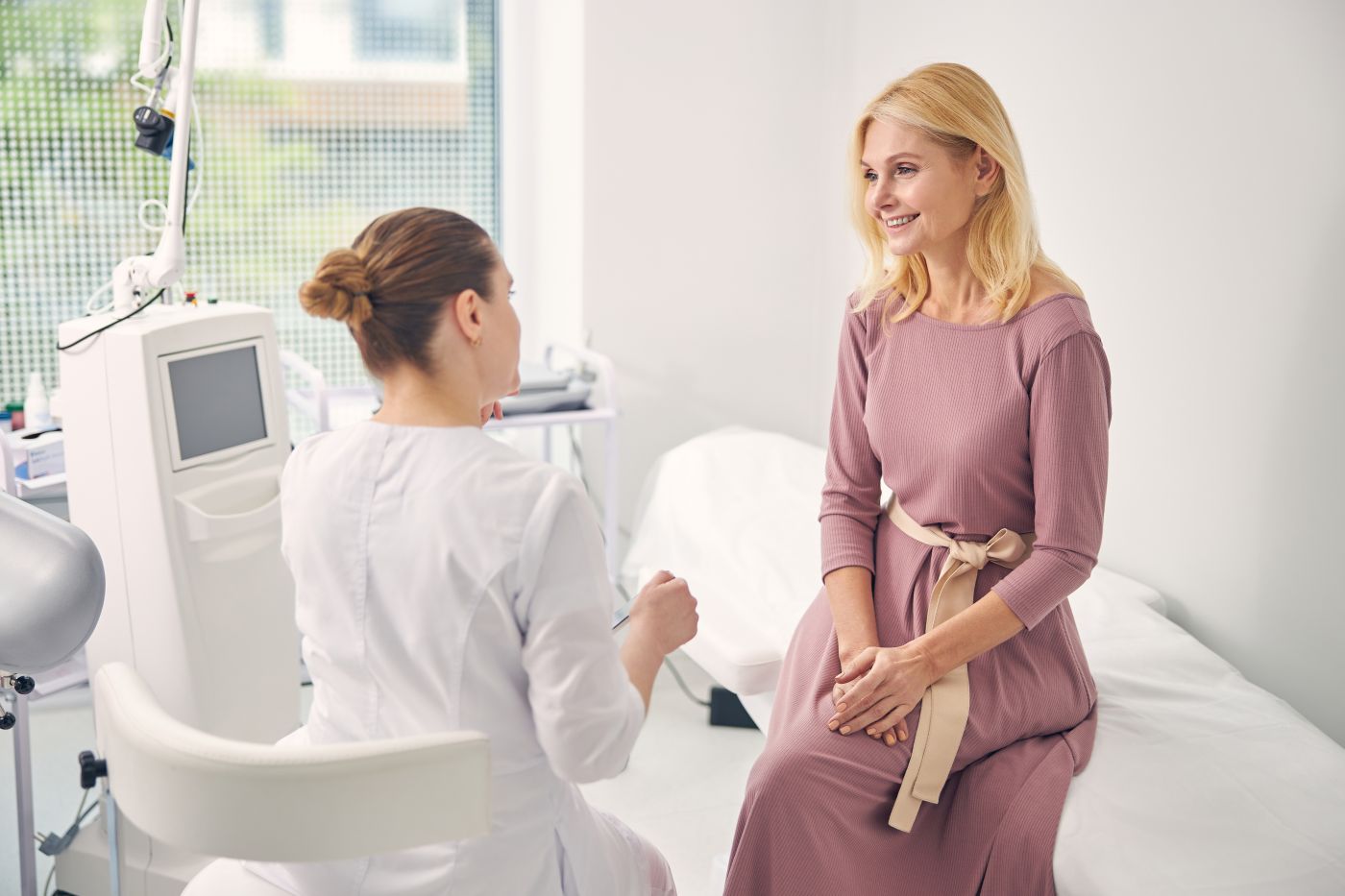
These are topics that are difficult to discuss, which is why we strive for a private setting, a calm conversation, and time for questions. The visit takes place in a gynecological office, without haste and without the need to explain the decision.
Services in the field of aesthetic gynecology
Opinions patients
See how patients rate the care in RCM.
I have been using RCM services for a very long time. The doctor led my pregnancy – with complete professionalism. She always answered all my questions with great pleasure. She is committed, yet very gentle and empathetic.
I highly recommend the clinic; the staff is always helpful. Dr. Ewa Szczepaniak is knowledgeable and a pleasant and warm person who never looks down on people.

I wholeheartedly recommend this medical center! From the very first moment you enter, you can see the professionalism and attention to detail. The visit was conducted in a very pleasant atmosphere, without unnecessary stress or delays. I will definitely return here if needed.
Friendly service and a clean, pleasant facility. The appointment time was adjusted to fit my work hours, and the whole process went quickly and stress-free.

Don't know which service to choose? Contact us!
During the consultation, the specialist will assess your situation, answer your questions, and suggest further steps. Book an appointment online or by phone.
On what aesthetic gynecology
Cosmetic and regenerative gynecology deals with the treatment of ailments and the correction of changes in the external genitalia and the vagina. It covers both functional problems – strenuous urinary incontinence, decreased tissue tension, dryness and discomfort – as well as issues related to appearance, such as excessive labia or scars from childbirth.
At the Różan Medical Center, every procedure is preceded by a qualifying consultation: a gynecological examination, determination of the cause of the symptoms, and discussion of possible solutions along with contraindications. We perform vaginal revitalization, treatments to support the treatment of stress urinary incontinence, labioplasty, filling of the labia, correction of birthmarks, and treatments with platelet-rich plasma, tropo-collagen, or hyaluronic acid.
Get to know the scope of aesthetic gynecology
Qualifying consultation
Qualifying consultation
Consultation is the starting point for any procedure. The doctor collects an interview – about previous pregnancies, ailments, cycle, medications taken, and previous procedures – performs a gynecological examination and assesses the condition of the tissues. Only on this basis can it be determined whether the problem requires surgery, pelvic floor therapy, hormonal treatment, or diagnostic testing in another direction.
During the visit, we discuss the available options, their course, contraindications, the number of procedures needed, and what can and cannot be expected after them. You will also receive information about preparation and the recovery period, so you can make your decision calmly, rather than under pressure from a deadline.
Treatment of forced urinary incontinence
Treatment of forced urinary incontinence
Stress urinary incontinence results from the weakening of the structures supporting the bladder and urethra – most commonly after childbirth, with heavy strain on the pelvic floor, or after menopause. It manifests itself in involuntary leakage of urine with an increase in pressure in the abdominal cavity: during coughing, sneezing, laughing, lifting, or running.
The treatment depends on the severity of the condition. In cases of mild and moderate severity, treatments to improve the tension of the tissues around the urethra are used, usually in a series, and urogynological physiotherapy is also provided at the Różan Medical Center. In advanced cases, only surgical treatment is effective – the decision on which solution is appropriate for your case is made based on the examination during the consultation.
Vaginal rejuvenation
Vaginal rejuvenation
Pelvic rehabilitation is a regenerative procedure used to reduce the tension in the pelvic walls, dryness, burning sensation and discomfort during sexual intercourse. These symptoms worsen after childbirth and during periods of estrogen deficiency – during breastfeeding, in perimenopause, after menopause and after oncological treatment.
The procedure is performed on an outpatient basis, usually without anesthesia or with superficial anesthesia, and its goal is to stimulate the tissues for regeneration. It is usually performed in a series at intervals determined by the doctor, and the effect builds gradually. After the procedure, you can return to your daily activities, following the recommendations regarding sexual intercourse and hygiene.
Labioplasty of smaller labia minora
Labioplasty of smaller labia minora
Labioplasty is a surgical procedure that aims to correct the shape and size of smaller labia. The most common reason for performing it is not aesthetics, but discomfort: rubbing against underwear, pain when cycling and practicing sports, irritation, difficulties with hygiene, and discomfort during sexual intercourse.
The procedure is performed under local anesthesia in an outpatient setting. It is preceded by a qualification consultation during which the doctor assesses the anatomical structure, discusses the scope of correction and the healing process. After the procedure, a period of several weeks of recovery is required, with restrictions on physical activity and sexual intercourse – the rules of this period are discussed in detail before a decision is made, and the healing process is evaluated during a follow-up visit.
Filling and revitalization of larger labia
Filling and revitalization of larger labia
With age, after pregnancies and after significant weight loss, the labia minora lose their firmness. This not only results in a change in appearance but also real discomfort: irritation, dryness and increased susceptibility to abrasions.
Depending on the indications, we use hyaluronic acid filling to restore volume, or a regenerative treatment to improve tissue quality. The method is chosen by the doctor during the consultation, after evaluating the anatomical structure and discussing expectations. The procedure is performed in an outpatient setting, and the effect of hyaluronic acid lasts for a period depending on the product and the individual rate of metabolism.
Scar correction after childbirth and thigh lift
Scar correction after childbirth and thigh lift
After a cut to the crotch or a cesarean section, the scar can be hard, pulling, oversensitive or painful to the touch and during sexual intercourse. These symptoms can persist long after the wound has healed and are not something that has to be left alone – the scar does heal, although it does require time and usually several procedures.
We choose the treatment based on the appearance and symptoms: we use softening and reconstructive procedures for scar tissue, and when the area around the scar is weakened – procedures to improve tissue tension. The consultation allows us to assess whether the scar has already fully healed and is ready for treatment. A complement is therapy conducted by a urogynaecological physiotherapist.
O-Shot and G-Shot
O-Shot and G-Shot
O-Shot and G-Shot are treatments that use platelet-rich plasma – a preparation prepared on-site from a small sample of the patient’s blood. The growth factors contained in it stimulate the tissues to regenerate, improving their blood supply and hydration. Since the material comes from the patient herself, the risk of allergic reactions is practically zero.
The treatments are used in cases of dryness and discomfort in the intimate area, reduced tissue tension, and weaker sexual sensations. They are performed on an outpatient basis, usually under local anesthesia, and the effect appears gradually over several weeks. The number of treatments is determined by the doctor after evaluating the indications during the consultation.
Qualifying consultation
Consultation is the starting point for any procedure. The doctor collects an interview – about previous pregnancies, ailments, cycle, medications taken, and previous procedures – performs a gynecological examination and assesses the condition of the tissues. Only on this basis can it be determined whether the problem requires surgery, pelvic floor therapy, hormonal treatment, or diagnostic testing in another direction.
During the visit, we discuss the available options, their course, contraindications, the number of procedures needed, and what can and cannot be expected after them. You will also receive information about preparation and the recovery period, so you can make your decision calmly, rather than under pressure from a deadline.
Treatment of forced urinary incontinence
Stress urinary incontinence results from the weakening of the structures supporting the bladder and urethra – most commonly after childbirth, with heavy strain on the pelvic floor, or after menopause. It manifests itself in involuntary leakage of urine with an increase in pressure in the abdominal cavity: during coughing, sneezing, laughing, lifting, or running.
The treatment depends on the severity of the condition. In cases of mild and moderate severity, treatments to improve the tension of the tissues around the urethra are used, usually in a series, and urogynological physiotherapy is also provided at the Różan Medical Center. In advanced cases, only surgical treatment is effective – the decision on which solution is appropriate for your case is made based on the examination during the consultation.
Vaginal rejuvenation
Pelvic rehabilitation is a regenerative procedure used to reduce the tension in the pelvic walls, dryness, burning sensation and discomfort during sexual intercourse. These symptoms worsen after childbirth and during periods of estrogen deficiency – during breastfeeding, in perimenopause, after menopause and after oncological treatment.
The procedure is performed on an outpatient basis, usually without anesthesia or with superficial anesthesia, and its goal is to stimulate the tissues for regeneration. It is usually performed in a series at intervals determined by the doctor, and the effect builds gradually. After the procedure, you can return to your daily activities, following the recommendations regarding sexual intercourse and hygiene.
Labioplasty of smaller labia minora
Labioplasty is a surgical procedure that aims to correct the shape and size of smaller labia. The most common reason for performing it is not aesthetics, but discomfort: rubbing against underwear, pain when cycling and practicing sports, irritation, difficulties with hygiene, and discomfort during sexual intercourse.
The procedure is performed under local anesthesia in an outpatient setting. It is preceded by a qualification consultation during which the doctor assesses the anatomical structure, discusses the scope of correction and the healing process. After the procedure, a period of several weeks of recovery is required, with restrictions on physical activity and sexual intercourse – the rules of this period are discussed in detail before a decision is made, and the healing process is evaluated during a follow-up visit.
Filling and revitalization of larger labia
With age, after pregnancies and after significant weight loss, the labia minora lose their firmness. This not only results in a change in appearance but also real discomfort: irritation, dryness and increased susceptibility to abrasions.
Depending on the indications, we use hyaluronic acid filling to restore volume, or a regenerative treatment to improve tissue quality. The method is chosen by the doctor during the consultation, after evaluating the anatomical structure and discussing expectations. The procedure is performed in an outpatient setting, and the effect of hyaluronic acid lasts for a period depending on the product and the individual rate of metabolism.
Scar correction after childbirth and thigh lift
After a cut to the crotch or a cesarean section, the scar can be hard, pulling, oversensitive or painful to the touch and during sexual intercourse. These symptoms can persist long after the wound has healed and are not something that has to be left alone – the scar does heal, although it does require time and usually several procedures.
We choose the treatment based on the appearance and symptoms: we use softening and reconstructive procedures for scar tissue, and when the area around the scar is weakened – procedures to improve tissue tension. The consultation allows us to assess whether the scar has already fully healed and is ready for treatment. A complement is therapy conducted by a urogynaecological physiotherapist.
O-Shot and G-Shot
O-Shot and G-Shot are treatments that use platelet-rich plasma – a preparation prepared on-site from a small sample of the patient’s blood. The growth factors contained in it stimulate the tissues to regenerate, improving their blood supply and hydration. Since the material comes from the patient herself, the risk of allergic reactions is practically zero.
The treatments are used in cases of dryness and discomfort in the intimate area, reduced tissue tension, and weaker sexual sensations. They are performed on an outpatient basis, usually under local anesthesia, and the effect appears gradually over several weeks. The number of treatments is determined by the doctor after evaluating the indications during the consultation.
What the consultation and procedure looks like the scope of aesthetic gynecology
From booking an appointment to the follow-up check-up after the procedure, we guide you through a clear and calm path. At every stage, you know what will happen and what you can expect.
Make an appointmentSchedule a consultation
Book an appointment online through the booking system on the website or by phone at +48 604 451 759. If you don’t know which treatment to consider, describe the situation over the phone – the first step is still a qualification consultation.
Call: (+48) 604 451 759Consultation and qualification
The doctor collects an interview, performs a gynecological examination, and assesses the condition of the tissues. We discuss possible solutions, contraindications, the number of procedures, and what can realistically be expected after them.
Treatment
The procedure is performed on an outpatient basis within the timeframe determined after the evaluation. Before the procedure, you will receive instructions regarding preparation, and after the procedure – guidelines for care, activity, and resuming sexual intercourse.
Inspection visit
During the follow-up check, we assess the healing process and the effectiveness of the treatment, and decide on the next steps if the treatment is carried out in a series of sessions.
Check the advice, which we have prepared

Frequently asked questions
Answers to the questions that female patients most often ask before aesthetic gynecology procedures. In individual cases, the evaluation of the doctor always determines the decision.
No. Every procedure is preceded by a qualifying consultation with a gynecological examination – without it, it is not possible to assess the cause of the symptoms or rule out contraindications. During the consultation, we determine the scope of the procedure and schedule the date of the procedure, usually within a short time frame.
Most procedures are performed under superficial or local anesthesia, and the sensations described are usually described as discomfort, not pain. Labioplasty is performed under local anesthesia and involves a recovery period. Before each procedure, the doctor thoroughly discusses what to expect.
If you know your body and have a tendency to improper healing or scarring, schedule a treatment as soon as possible after giving birth. Scar therapy using tropocolagen or plasma infusion reduces inflammation and speeds up the healing process. You don’t have to worry if you are breastfeeding—local anesthesia is not contraindicated during lactation; we will safely schedule the treatment using plasma obtained from your blood. If you are concerned about the appearance or healing of your scar or your obstetrician recommends a consultation during the follow-up visit, at the Różan Medical Center we will arrange an urgent appointment so that you can fully enjoy motherhood without worrying about scarring, discomfort, or pain.
The visit takes place in a gynecological office, in a private setting and without haste. We work with PZU, Lux Med, Medicover, Compensa, Świat Zdrowia, Polmed, Enel-Med, Signal Iduna, JP Medica, and the scope of services depends on the terms of the policy – cosmetic procedures are usually not covered by the policy. Before the visit, call the registration department and we will check the possibility of billing.

Take the first step – make an appointment The Pink Medical Center
Choose a specialist and a convenient date. Book online or by phone, without unnecessary formalities. Take care of your health today!